



Why aren’t they converting?
That was the question behind this funnel audit for a SaaS lead magnet campaign. On paper, the Meta ad looked great—solid CTR, strong creative, healthy budget.
But something wasn’t adding up:
Over 100 people clicked through, yet not one form submission came through.
In this case study, we’ll walk through how we diagnosed the issue, rebuilt the tracking layer, and optimized both the ad and landing page to finally close the conversion loop.
The Problem
A SaaS brand was running paid campaigns to a lead magnet landing page.
- High click-through rates (CTR)
- Product-led visuals
- Healthy ad spend
But despite over 100 landing page views, no leads were captured.
Something wasn’t working between the ad click and the form submission.
What the Data Showed
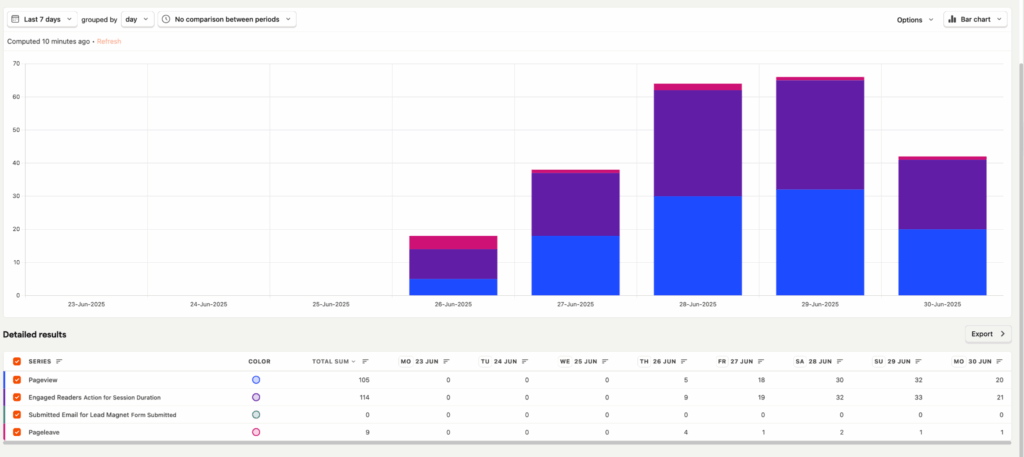
Using PostHog and Plausible Analytics (June 26–30), we found:
- 105 Pageviews
- 114 Engaged Sessions
- 0 Form Submissions
- 9 Page Leaves
- Scroll depth dropped before reaching the form
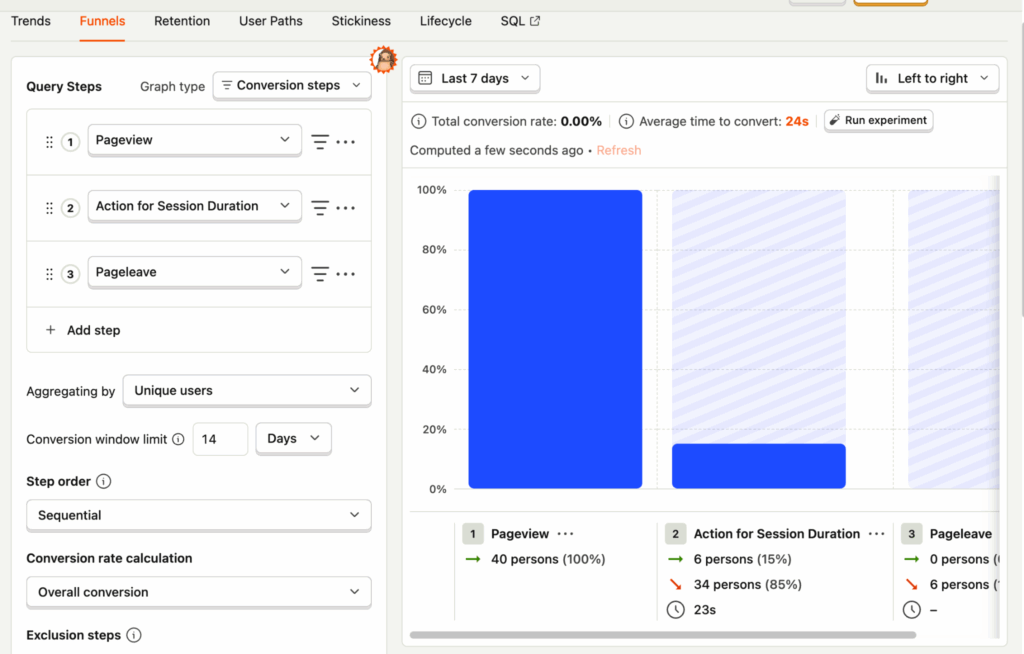
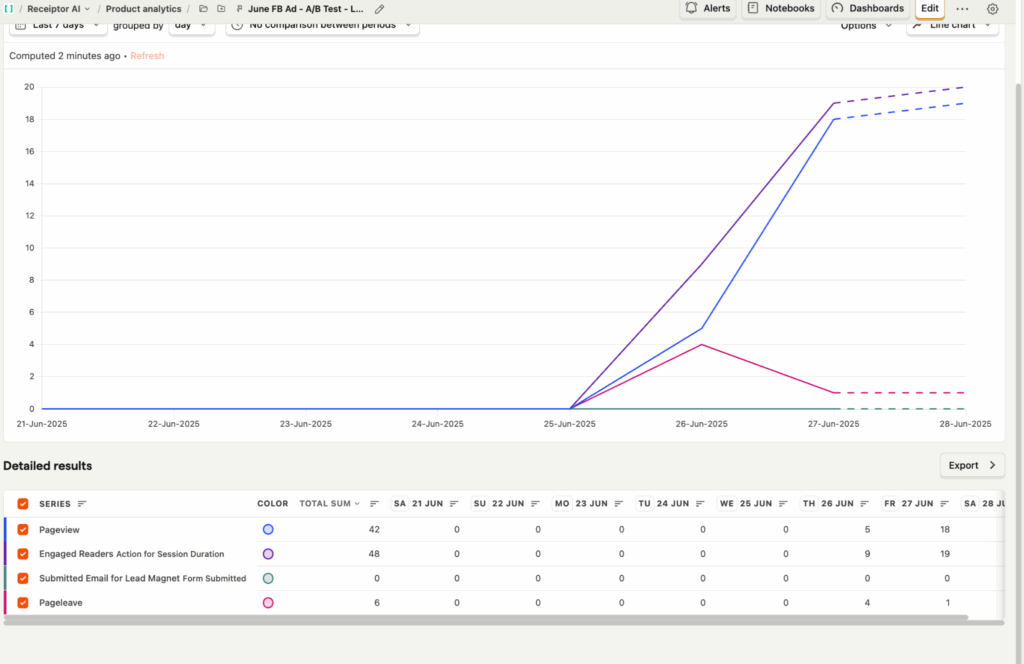
Engagement was happening. But conversion? Zero. We had a bottleneck.
Ad Strategy Breakdown
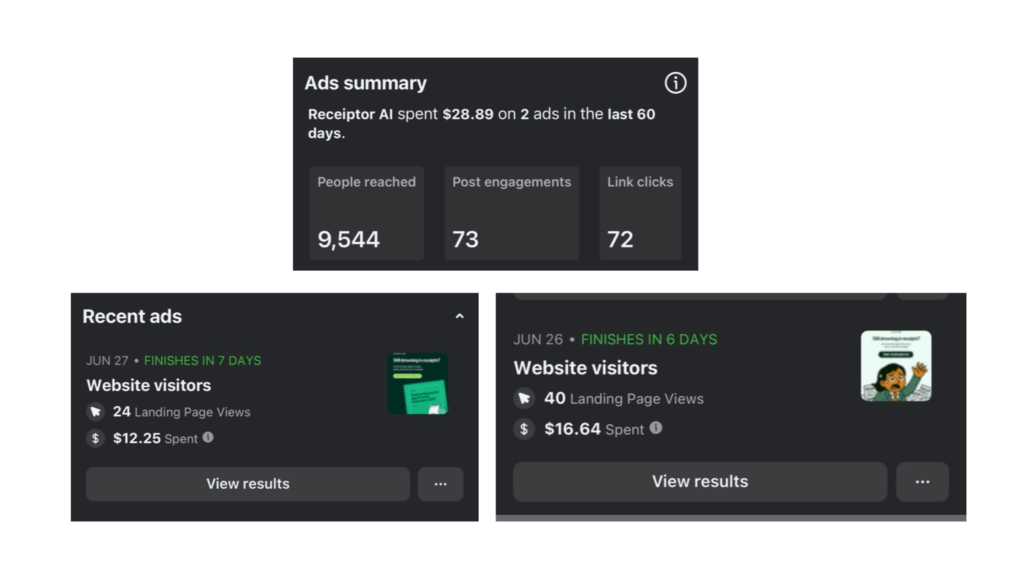
From a previous campaign, we had already learned the hard way that CTR can be misleading.
The fix?
- Switched optimization from Link Clicks → Landing Page Views
- Replaced cartoonish visuals with clean product visuals
- Installed Meta Pixel + PostHog tracking to measure scroll and form interaction
Result:
- Cost per landing page view dropped from $0.68 → $0.30
- Engagement doubled
- We finally had data we could trust
Lesson: Don’t optimize for vanity metrics. Optimize for clarity and user behavior.
Landing Page Audit
The landing page was built in Contentful. At first glance, everything looked fine.
But when we tested the form, we found:
- No
onSubmittracking logic - No custom analytics events fired
- No success or error feedback for users
Even highly interested users had no way to complete the journey.
What We Fixed
Tracking Layer
- Connected PostHog to fire events for scroll, CTA clicks, and form submits
- Verified Plausible was receiving valid events
- Manually submitted the form to debug visibility
UX Enhancements
- Moved the form above the fold
- Reduced to email-only field
- CTA changed from “Submit” → “Get My Free Guide”
- Added microcopy: We hate spam too. Unsubscribe anytime.
Ad Optimization Approach
- Ran lean $5–10/day A/B tests
- Tested one variable at a time: tone, CTA, headline, visual
- Measured results based on Landing Page Views and scroll depth, not just CTR
Results
- Tracking worked
- Analytics began capturing true behavior
- Retargeting audiences were built from real LPVs
- Conversion friction was removed
- Cost per result improved — and finally aligned with engagement
We didn’t just fix a form. We restored the funnel’s clarity from top to bottom.
Key Takeaways
- High CTR doesn’t mean your funnel works
- A silent tracking bug can wipe out your ROI
- Good creative is disciplined: it blends storytelling with systems
- Tools like PostHog and Plausible help you see what really happens after the click
Let’s fix your funnel
You could be one form field away from a high-converting funnel.
Before you rewrite copy or increase ad spend, fix what happens after the click.